How to grow thyme indoors: light, water, and harvest

Written by Jon Persson, partner and designer at Herbs at Home
Published · 6 min read

Thyme in short
One of the most drought-tolerant culinary herbs and a reliable indoor perennial. Appears throughout our winter and aromatic guides.
- Light
- Full sun6+ hours direct sun
- Water
- Let it dry outAllow to dry between waterings
- Temperature
- 60–70°F
- Difficulty
- Beginner
What usually goes wrong
Patches in the middle of the mat go brown and brittle
Fix: Cut out the dead sections to open the mat up, top-dress around the base with grit or coarse sand, and move it somewhere with more air. Water the soil, not the plant.
Yes, you can grow thyme indoors. Put it in your sunniest window, where it gets at least 6 hours of direct sun a day, in a pot with a drainage hole and gritty soil. Water only when the soil is dry. Thyme handles a forgotten week far better than a soggy pot. Snip the tips often, and it stays full and smells strong.
What does thyme need to grow indoors?
Thyme needs strong sun, soil that drains fast, and long dry spells between waterings. This table has the basics. The full guide to the plant is on our thyme herb page.
| What | What thyme wants |
|---|---|
| Light | 6 or more hours of direct sun, from a south or west window |
| Water | Only when the soil is dry |
| Temperature | Normal room warmth, about 65 to 70°F by day and 55 to 60°F at night[1] |
| Pot | Clay, with a drainage hole |
| Soil | Sandy and gritty, with perlite or grit mixed in |
| Food | Very little |
How much light does thyme need indoors?
Thyme needs at least 6 hours of direct sun a day.[1] Direct sun means the light lands right on the leaves. A south window is best. A west window works too.
In winter the days are short and the sun is low. If your window gives less than 6 hours, add a grow light. Penn State Extension suggests placing herbs 6 to 12 inches below two 40-watt cool white fluorescent bulbs for 14 to 16 hours a day.[1] A plain LED grow light on a timer does the same job. Maryland Extension also says herbs need extra light in winter.[2] Our guide to indoor lighting for herbs shows how to set one up.
Too little light shows up fast. The stems stretch, the gaps between leaves get wider, and the smell fades. If your thyme looks floppy and pale, it wants more sun.
How often should you water thyme?
Water thyme when the soil is dry, not on a set day. Penn State Extension says thyme should dry out slightly between waterings, and Maryland says the same.[1][2] The Royal Horticultural Society calls thyme drought tolerant and says wet soil rots the roots.[3]
Here is how to check:
- Push a finger into the soil. If it feels damp an inch down, wait.
- Lift the pot. A dry pot feels light. A watered one feels heavy.
- When it is dry, water slowly until water runs out the bottom hole.
- Empty the saucer after 10 minutes. Thyme should never sit in water.
In a sunny room, many pots need water about once a week. In winter it is often less. Pot size, heat, and light all change this, so go by the soil, not the calendar.
Wet soil is the main thing that kills indoor thyme. Roots in soggy mix turn brown and soft. See our guide to root rot and how to treat it if the plant wilts while the soil is wet.
What is the best pot and soil for thyme?
The best pot for thyme is a clay pot with a drainage hole. Clay lets water leave through its sides. The RHS suggests a pot at least 6 inches wide and 4 inches deep for one plant.[3] Do not pick a pot much bigger than the roots. Extra soil stays wet.
For soil, use bagged potting mix and stir in perlite. Perlite is the small white bits of puffed rock that help water drain. Maryland suggests 2 parts potting mix to 1 part perlite.[2] The RHS says you can mix in horticultural grit, up to a quarter of the pot.[3] Either mix drains fast, which is what thyme wants. Our guides to perlite and the best potting mix for indoor herbs go deeper, and the pot guide for herbs covers sizes.
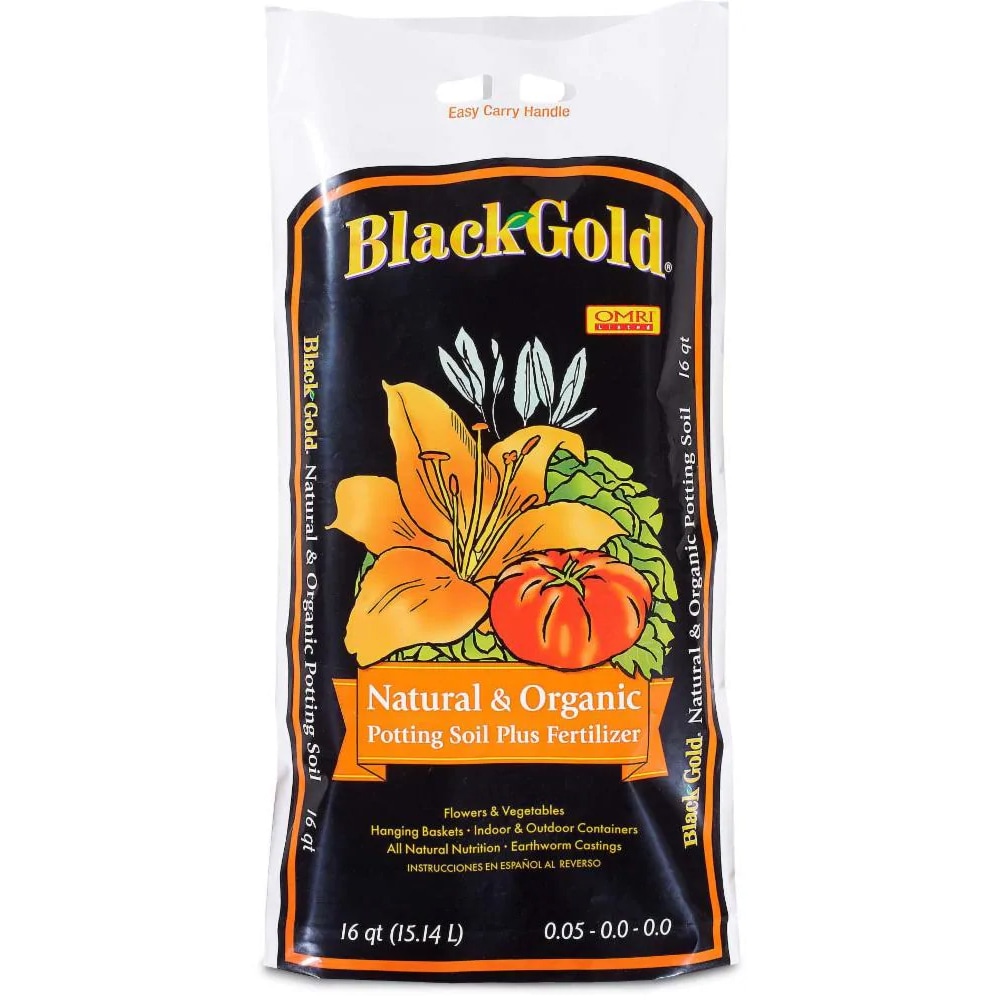
16-quart organic potting soil mix
- Provides retention advantage against sun exposure
- Contains organic grade fertilizer
- Contains enough soil for 1 cubic feet of space
What is the best way to start thyme indoors?
The easiest way is to buy a small plant. Seedlings are small and easy to overwater. Repot a store plant into a clay pot with gritty mix as soon as you get home. Store pots often hold dense, wet soil.
You can also take cuttings from a healthy plant. Snip 3 to 4 inches of green stem, strip the bottom leaves, and push the stem into damp gritty mix. Thyme roots easily this way.
How do you harvest thyme so it keeps growing?
Snip the green tips often. Cut just above a pair of leaves. Regular picking keeps thyme bushy. The RHS says you can harvest all year, since thyme keeps its leaves in winter, but new growth in late spring and summer has the best flavor.[3]
- Cut only green growth. Old bare wood often does not grow back, so a hard cut into it can leave a stump.[3]
- Take a little at a time. Use the top few inches of several stems instead of stripping one side.
- Trim once a year after flowering. Take about the top third of the plant, staying in green growth. Our guide to pruning herbs shows where to cut.
To store extra thyme, hang sprigs in a warm, shady, airy spot until dry. Here is how to dry herbs at home.
What are the best companion plants for thyme?
Indoors, the best companions for thyme are herbs that like the same sun and dry soil. These include rosemary, oregano, sage, and lavender. They all want a sunny window and a pot that dries out between drinks.
Give each its own pot and line them up on one sill. Keep thyme away from herbs that want wet soil, such as basil, parsley, and cilantro. Those plants need water often, and thyme in the same pot would rot. Our guides to growing rosemary indoors, growing oregano indoors, and growing sage indoors cover the neighbors. For more ideas, see how to group indoor herbs together.

The enthusiast’s guide to herbs
In-depth care cards for the 35 herbs people most often grow indoors.
See what’s insideWhy is my thyme dying? Common problems and fixes
Most thyme problems come from too much water or too little light. Find the symptom below.
| What you see | Likely cause | Fix |
|---|---|---|
| Patches in the middle of the plant go brown and brittle | Dense growth traps damp air against the stems | Cut out the dead parts to open the plant up. Put it where air moves. Water the soil, not the leaves. |
| Woody sticks with a tuft of green on each end | Age. Thyme turns woody from the base up | Trim lightly every year after flowering. If it is too far gone, take cuttings. |
| Fast, floppy growth with little smell | Too much food and water, or too little sun | Stop feeding. Let the pot dry out. Move it to the sunniest window. |
| Wilting while the soil is wet | Root rot | Slide the plant out, cut off soft brown roots, and repot in gritty mix. |
| Leaves turning yellow and dropping | Soil staying wet | Water less. Check that the hole is not blocked. Empty the saucer. |
Shrubby thyme gets straggly after several years. The RHS advises replacing old plants with new ones grown from cuttings.[3] If you want a quick checklist for other causes, see why indoor herbs die.
Thyme needs little food. If you do feed it, use a weak dose and not often, since rich food gives fast growth with weak flavor. Our guide to fertilizer for herbs lists gentle options.
Questions & answers
Can you grow thyme indoors all year?
Yes. Thyme is a perennial, so it lives for years. In winter it needs the sunniest window you have, plus a grow light if the days are short. Water less often when the room is cool and the plant grows slowly.
How often should I water an indoor thyme plant?
When the soil is dry. Many pots need water about once a week in a sunny room, and less in winter. Check with a finger an inch into the soil, or lift the pot to feel how light it is.
Is thyme drought tolerant?
Yes. Thyme handles a missed watering well. The RHS calls it drought tolerant and says wet soil is the bigger risk.[3]
Does thyme need direct sun?
Yes. Aim for at least 6 hours of direct sun a day. A south window is best. Add a grow light if your window falls short.
Why does my indoor thyme have no smell?
It is usually getting too much water or food, or too little light. Thyme makes the strongest flavor when it is a little dry and sits in bright sun. Stop feeding it, water less, and move it to a sunnier window.
Can I use store-bought thyme to start a plant?
A potted plant is the safer start. Sprigs from a growing plant can root in damp gritty mix, but cut sprigs sold as food are a gamble.

Ten printable herb cards, free
One card per herb: how much light and water it wants, and what goes wrong first.
Get them nowReferences
-
Penn State Extension, Growing herbs indoors. https://extension.psu.edu/growing-herbs-indoors ↩︎ ↩︎ ↩︎ ↩︎
-
University of Maryland Extension, Growing herbs in containers and indoors. https://extension.umd.edu/resource/growing-herbs-containers-and-indoors ↩︎ ↩︎ ↩︎
-
Royal Horticultural Society, How to grow thyme. https://www.rhs.org.uk/herbs/thyme/grow-your-own ↩︎ ↩︎ ↩︎ ↩︎ ↩︎ ↩︎ ↩︎


