How to grow lemon balm indoors: light, water, harvest

Written by Jon Persson, partner and designer at Herbs at Home
Published · 6 min read

Lemon balm in short
A citrus-scented mint relative that is as easy as mint and just as vigorous. Give it its own container.
- Light
- Partial shadePartial to full sun
- Water
- Keep moistKeep evenly moist
- Temperature
- 60–75°F
- Difficulty
- Beginner
What usually goes wrong
Neighbouring plants in the same pot start to fail
Fix: Its own pot, always. Deadhead the flowers before seed sets, and lift and divide the clump each spring to keep it in bounds.
To grow lemon balm indoors, put it in its own pot with drainage holes, in a bright window that gets a few hours of morning sun. Keep the soil evenly moist and the room between 60 and 75°F. Buy a small plant, since seed is slow. Cut stems often, and cut the whole plant back when flower stems show up.
What does lemon balm need indoors?
Lemon balm needs bright light, steady water, and a pot of its own. It is a mint relative and grows fast, so it is an easy herb for a beginner. Our lemon balm plant profile has the quick facts in one place.
| Need | What to do |
|---|---|
| Light | A few hours of sun in an east window, or bright light from a south window |
| Temperature | 60 to 75°F |
| Pot | 8 inches wide or more, with drainage holes, and no other plants in it |
| Soil | Bagged potting mix that drains well |
| Water | Keep it evenly moist, never soggy |
| Harvest | Cut stems before the flowers open |
How much light does lemon balm need?
Lemon balm needs a few hours of sun a day. Extension guides say it grows in full sun to partial shade.[1] Indoors, an east window is a good spot. It gets gentle morning sun and no hot afternoon glare.
A south or west window works too, but the glass and sill can get very hot in the afternoon. If the leaves on the window side turn pale with crisp brown edges, that is scorch. Move the pot back a foot, or hang a sheer curtain. Trim the burnt leaves off.
Too little light makes the plant tall and floppy, with long gaps between leaf pairs. In winter, a window may not be enough. Our guide to indoor lighting for herbs covers grow lights. If your only window is dim, lemon balm is also on our list of herbs for low light.
What pot and soil does lemon balm need?
Use a pot 8 inches wide or more, with drainage holes, and give lemon balm the whole pot. Do not plant it with other herbs. It grows fast into a big clump that crowds its neighbors, and it can drop a lot of seed.[2] If other plants in the pot start to fail, move them out.
Fill the pot with bagged potting mix. Soil that stays moist but drains well is what it likes.[1] Do not use garden soil, which packs down in a pot. Our guide to the best potting mix for indoor herbs compares the options, and our pot guide covers sizes and materials.
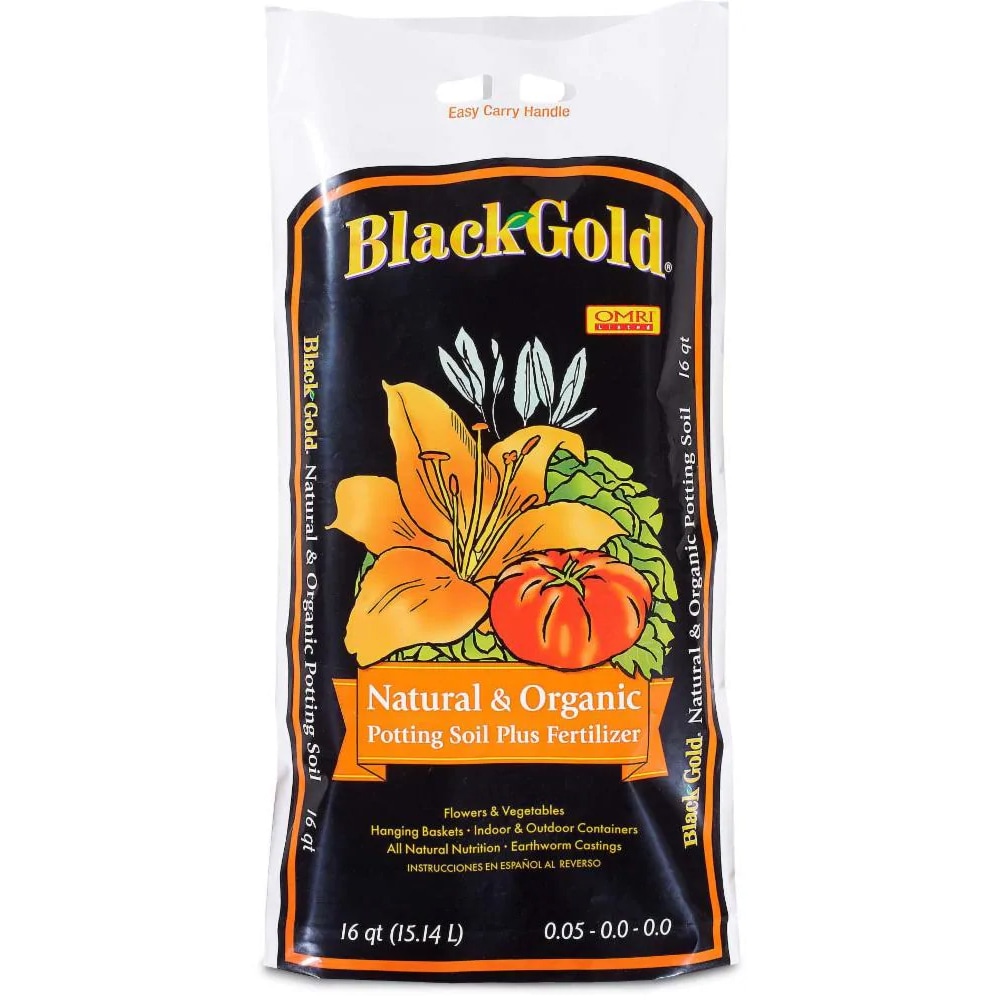
16-quart organic potting soil mix
- Provides retention advantage against sun exposure
- Contains organic grade fertilizer
- Contains enough soil for 1 cubic feet of space
How often should you water lemon balm?
Water lemon balm when the top inch of soil feels dry, and keep the soil evenly moist. Do not let it dry out completely. A dry lemon balm wilts fast, and the leaf edges turn brown and crisp. It usually perks up within hours of a good drink.
Water until it runs out the bottom, then empty the saucer. Soggy soil causes root rot.[3] If the plant wilts while the soil is wet, check the roots. Our root rot guide shows what to look for.
In spring and summer, feed it with weak liquid plant food about once a month. See our fertilizer guide for herbs for what to buy.
Can you grow lemon balm from seed?
Yes, but it is slow, and buying a small plant is easier. The seeds are very small.[3] They need light to sprout, so press them onto the surface of damp mix and do not bury them. They sprout in 7 to 14 days at 65 to 70°F.[4]
Here is how to sow lemon balm seeds:
- Fill a small pot or tray with damp seed-starting mix.
- Press the seeds onto the surface. Cover them with, at most, a very thin dusting of mix.
- Mist the top so it stays damp. Do not let it dry out.
- Keep it at 65 to 70°F in a bright spot.
- When seedlings have 4 true leaves, move each one to its own pot.[4]
A true leaf is a leaf that looks like the adult plant. The first two tiny leaves do not count.
You can also start new plants from a stem cutting or by splitting a clump. Cut a 4-inch stem tip, strip the bottom leaves, and set it in a glass of water. Pot it up once roots show.
How do you harvest lemon balm?
Cut stems often, and cut them before the plant flowers. A good rule is to take about a third of the plant at a time.[3] Pick single leaves when you only need a few. Cut whole stems when you want more. Frequent cutting keeps the plant bushy. Our guide to pruning herbs shows where to cut.
Handle the leaves gently, because they bruise easily.[4]
When flower stems appear, the leaves turn coarse and the lemon smell fades. Cut the whole plant back by two-thirds. It sends up a fresh flush of leaves in a few weeks, and the new leaves smell of lemon again.[2] If you want to keep it small, snip the flower stems before they open so no seed forms.[2]
What do you do with lemon balm leaves?
Use lemon balm leaves fresh. Dried leaves turn brown and lose much of their scent.[4]
- Tea. Pour hot water over a few fresh leaves. Let them sit for about 5 minutes.
- Drinks. Drop sprigs into iced tea, water, or lemonade.
- Salads and fruit. Tear the leaves over salad or berries.
- Fish, pork, and eggs. Add chopped leaves at the end of cooking.
- Jelly and vinegar. Lemon balm is used in jellies and vinegars.[1]
- Freezing. The leaves can be frozen.[1] See our guide to preserving fresh herbs.
If you do want dried leaves for tea, hang small bunches in a warm, dark spot with good air flow.[1] Our guide to drying herbs covers each method.
What do lemon balm leaves look like?
Lemon balm leaves are bright green, crinkled, and heart-shaped, with toothed edges. Rub one and it smells like lemon. The plant is a mint relative, so the stems are square.
Mint leaves look much the same, but they smell of mint. If you are comparing the two, our mint guide shows how mint grows in a pot.
Why is my lemon balm dying? Common problems
Most lemon balm problems come from too much sun, dry soil, or too little light. Find your symptom below.
| Symptom | Likely cause | Fix |
|---|---|---|
| Pale leaves, crisp brown edges on the window side | Scorch from hot afternoon sun | Move it back, or use a sheer curtain. Trim burnt leaves. |
| Wilting, dry soil | Thirsty | Water well. It perks up in hours. |
| Wilting, wet soil | Rotting roots | Check the roots. See our root rot guide. |
| Tall and floppy, gaps between leaves | Too little light | Move it to a brighter window. Cut it back by half. |
| Coarse leaves, little smell | Flower stems coming | Cut the plant back by two-thirds. |
| White powder on leaves | Powdery mildew[2] | Cut off the worst leaves. Give it more space and air. |
| Other plants in the pot fail | Lemon balm crowding them | Give each herb its own pot. |
| Tiny bugs or sticky leaves | Aphids or spider mites | Rinse in the sink. See indoor plant pests. |
For other causes, our guide to why indoor herbs die covers the usual list. If you want more beginner picks, see the easiest herbs to grow.

The enthusiast’s guide to herbs
In-depth care cards for the 35 herbs people most often grow indoors.
See what’s insideQuestions & answers
Is lemon balm easy to grow indoors?
Yes. It grows fast and handles a few hours of sun. It needs its own pot, steady water, and regular cutting.
Does lemon balm come back every year?
Yes. It is a perennial, which means one plant keeps growing for several years. Cut it back often, and split the clump in spring when it fills its pot.
Can lemon balm grow in a pot with other herbs?
Not well. It grows fast and crowds other herbs. Give it a pot of its own.
Why does my lemon balm not smell like lemon?
The scent is strongest in young growth. It fades when flower stems come up. Cut the plant back by two-thirds and the new leaves smell of lemon again.
Can you grow lemon balm in water?
Stem cuttings root in a glass of water. Pot them up in mix once roots show, since the plant grows better in soil.

Ten printable herb cards, free
One card per herb: how much light and water it wants, and what goes wrong first.
Get them nowReferences
-
University of Illinois Extension, Lemon balm. https://extension.illinois.edu/herbs/lemon-balm ↩︎ ↩︎ ↩︎ ↩︎ ↩︎
-
Wisconsin Horticulture, Division of Extension, Lemon balm (Melissa officinalis). https://hort.extension.wisc.edu/articles/lemon-balm-melissa-officinalis/ ↩︎ ↩︎ ↩︎ ↩︎
-
Utah State University Extension, How to grow lemon balm in your garden. https://extension.usu.edu/yardandgarden/research/lemon-balm-in-the-garden.php ↩︎ ↩︎ ↩︎
-
Johnny’s Selected Seeds, Lemon balm key growing information. https://johnnyseeds.com/growers-library/herbs/lemon-balm/lemon-balm-key-growing-information.html ↩︎ ↩︎ ↩︎ ↩︎

