Everything you need to know about liquid seaweed fertilizer

Written by Amanda Shiffler, M.Sc. Agronomy, B.Sc. Horticultural Science
Published · 6 min read
Some links below go to Amazon. If you buy through one, we earn a small commission at no extra cost to you.

Liquid seaweed is sold as a fertilizer, and read the label and you will find an NPK of something like 0-0-1. By the usual definition it barely qualifies. That number is the source of most of the confusion about it, and understanding why it is so low tells you how to use the stuff.
What liquid seaweed fertilizer is
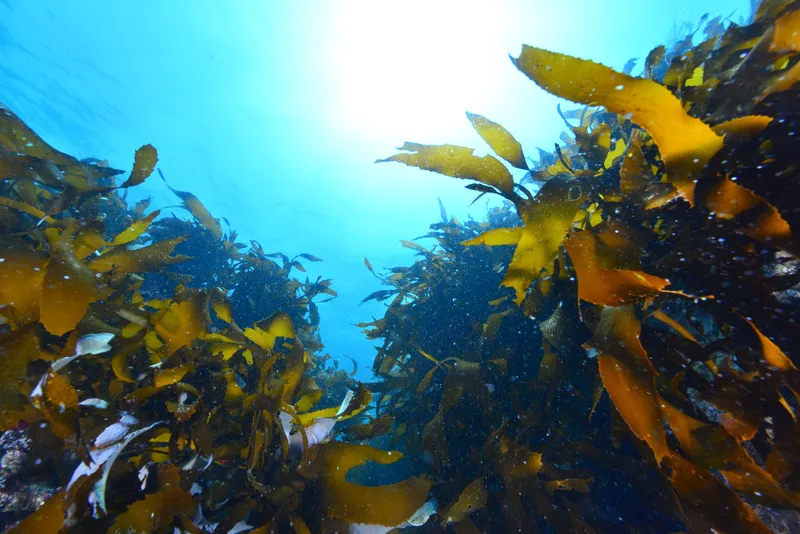
Almost every commercial liquid seaweed product is made from Ascophyllum nodosum, a brown kelp harvested from cold North Atlantic waters. The seaweed is broken down, either by alkaline extraction or cold processing, into a concentrate you dilute in water.
What comes out is not a nutrient source. It is a biostimulant: a product that changes how a plant grows and how it handles stress, rather than feeding it. The active components are plant growth regulators and structural compounds the plant does not manufacture in quantity itself.
The main ones are cytokinins and auxins, hormones involved in cell division and root initiation; betaines, which help plants hold water under drought stress; mannitol, a sugar alcohol that chelates minerals in soil and makes them easier for roots to take up; and alginates, complex carbohydrates that improve soil structure by binding fine particles into crumbs.
Potassium is the one conventional nutrient present in useful quantity, which is why the third NPK number is the only one above zero.
What to expect from it, and what not to
The realistic effects are better root development in young plants and transplants, improved tolerance of drought, heat and transplant shock, and slightly better uptake of the micronutrients plants need in trace amounts from soil that already contains them. There is reasonable agricultural research behind the stress-tolerance and rooting effects.
What it will not do is feed a hungry plant. A herb with yellowing lower leaves is short of nitrogen, and no amount of seaweed will fix that. The alginate content does help soil hold onto what is there, reducing nutrient leaching through the pot, and that is a different thing from supplying nutrients in the first place. Marketing for these products tends to blur the line, and the practical consequence is people using seaweed as their only feed and wondering why growth stalls.
Use it alongside a nitrogen source rather than in place of one. On a windowsill herb garden that usually means a balanced liquid feed during the growing season, with seaweed added at transplant time and during hot spells.
Seaweed compared to fish emulsion
Fish emulsion is a fertilizer in the ordinary sense, typically around 5-1-1, and it supplies nitrogen. Seaweed supplies hormones and trace elements and almost no nitrogen. They solve different problems.
This is why so many products on the shelf are fish-and-seaweed blends. Those blends carry a real NPK, often something like 2-3-1, and they are the more sensible single purchase if you are only going to buy one bottle.
The tradeoff is smell. Fish emulsion has a strong odor that lingers for a day or two, which matters a great deal for indoor plants and not at all outdoors. Straight seaweed has a mild seaside smell that most people do not mind in a kitchen.
How to apply it
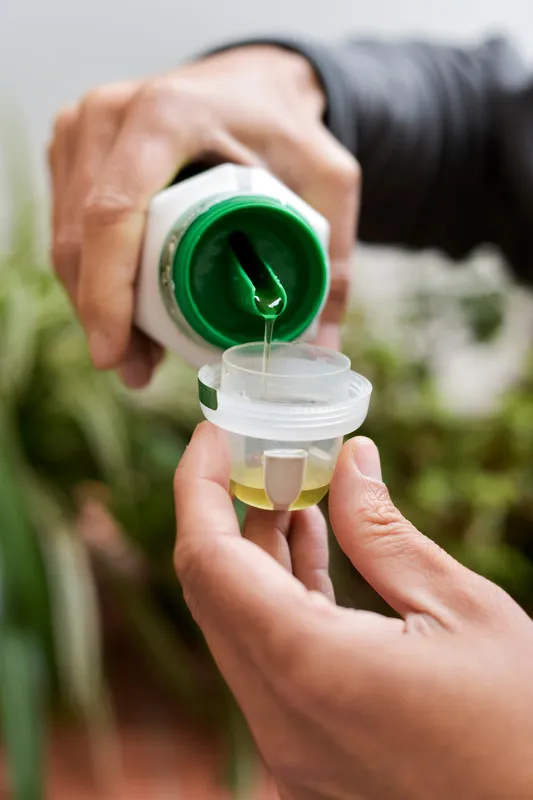
There are two methods and they do different jobs.
A soil drench is the default. Dilute according to the label, usually somewhere between one and three tablespoons per gallon, and water it in around the base of the plant until it runs from the drainage hole. This is the method that reaches the roots and does the most for root development and soil structure.
A foliar spray is absorbed through the leaves and acts faster, within a day or two, which makes it the better choice for a plant under visible stress. Dilute it more heavily than you would for a drench, roughly half strength, and spray until the leaves are wet without dripping. Do it early in the morning or in the evening. Midday sun evaporates the spray before it is absorbed and can scorch wet leaves.
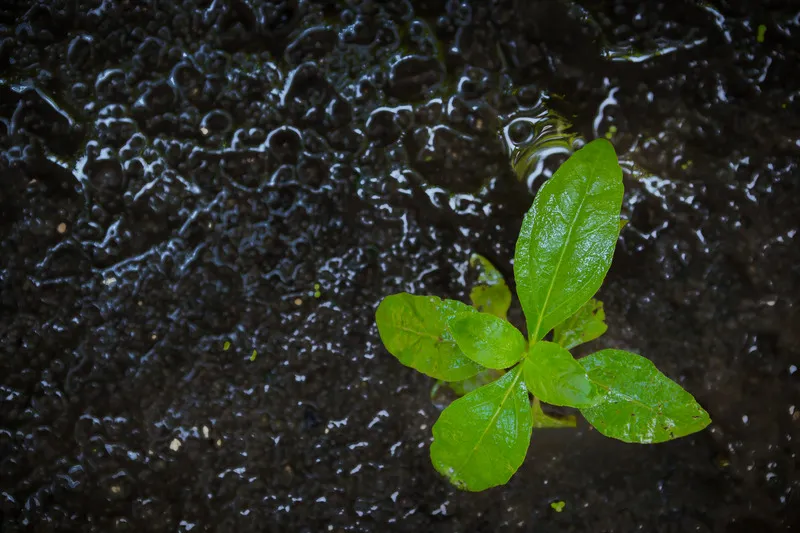
Apply every two to four weeks through the growing season. Cut back or stop entirely once growth slows in autumn, since there is nothing for a dormant plant to do with it.
Dilution is the one place people go wrong. More is not better, and concentrated seaweed will burn roots and leaf margins. If the label is missing or unclear, the old guideline is to dilute until the mix is the color of weak tea.

Neptune’s Harvest seaweed plant food, 0-0-1 (pint)
- Cold-processed from Ascophyllum nodosum, a North Atlantic kelp
- NPK 0-0-1, so it supplements a feed rather than replacing one
- Dilute before use; mixes without sediment and has very little smell
For indoor herbs we use Neptune’s Harvest seaweed. It is cold-processed Ascophyllum nodosum, it mixes cleanly without sediment clogging a sprayer, and it has very little smell, which is the deciding factor for anything kept in a kitchen. Its NPK is 0-0-1, so pair it with a nitrogen source.
Drawbacks
It is expensive per bottle compared to synthetic fertilizer, though the dilution rates are high enough that a 36-ounce bottle lasts a windowsill garden a couple of seasons.
It has a limited shelf life. Most manufacturers give two to three years unopened, less once opened, and a bottle that has separated badly or smells of sulfur has gone off. Store it cool and dark, and do not buy in bulk.
And the low NPK means it is a supplement rather than a feeding program, which is worth repeating because the labelling rarely says so plainly.
Which plants respond most
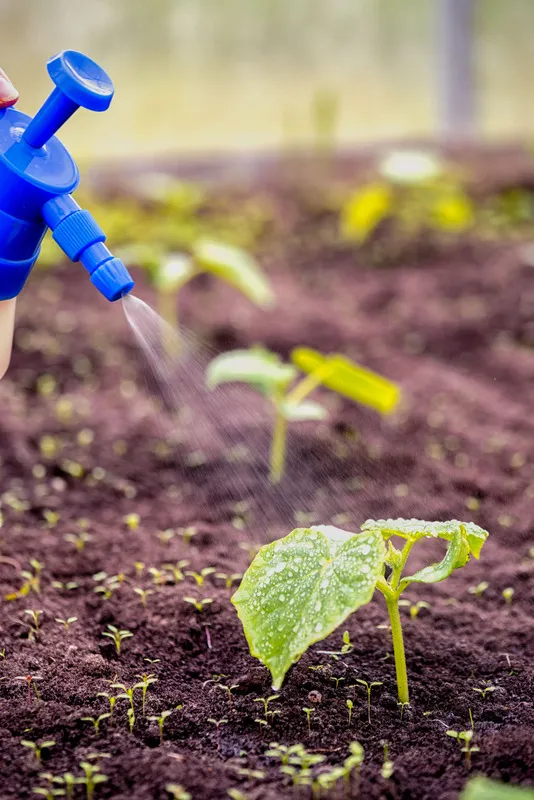
Seedlings and transplants respond most reliably, since rooting and transplant shock are exactly what the hormone content acts on. Watering new transplants in with a diluted seaweed drench is the single most useful application.
Leafy greens such as lettuce, spinach and kale, and soft-stemmed culinary herbs like basil, parsley and cilantro, generally show a visible response. Root vegetables benefit from the rooting effect. Fruit trees and lawns are common commercial uses, mostly for stress tolerance through dry spells.
Go lighter than the label suggests with a few groups. Seedlings and cuttings want a quarter-strength solution. Orchids, ferns and most succulents come from low-nutrient environments and need heavy dilution or nothing at all. Acid-loving plants such as azaleas and blueberries need a specific acidic feed that seaweed does not replace.
Beyond that it is safe on essentially anything you grow to eat. There is no chemical residue concern and no waiting period between application and harvest, which is a genuine advantage over synthetic feeds for culinary herbs.
Making your own
Homemade seaweed extract is worth doing if you live near a coast, and the result is weaker and less consistent than a commercial concentrate. Treat it as a soil conditioner rather than a measured feed.
Check the rules before you collect anything. Most coastlines regulate seaweed harvesting, many require a permit, and taking growing seaweed off rocks is prohibited in more places than collecting storm-cast weed from the strand line.
Rinse the seaweed thoroughly in fresh water to get the salt off. Salt is the thing that will damage your plants, so rinse more than you think is necessary.
Pack the rinsed weed into a bucket or barrel, cover it with water, and put a loose lid on it. It needs to vent, because fermentation produces gas and a sealed container will build pressure. Leave it somewhere the smell will not bother anyone, because it becomes genuinely foul within a week.
Stir it every few days. After four to six weeks the weed will have broken down into a dark liquid. Strain it, and dilute it to the color of weak tea before use. The solids left behind go on the compost heap.
Store the strained liquid in a cool dark place and use it within a few months.


